🚨 Septic arthritis is an orthopaedic emergency. If your child has a hot, swollen, painful joint with fever and refuses to move the limb, seek immediate medical attention.
Septic arthritis is a bacterial infection inside a joint. The joint space fills with pus, causing rapidly progressive destruction of the articular cartilage and bone. In children, the hip and knee are most commonly affected, followed by the ankle, shoulder, and elbow.
Without urgent surgical drainage, the infection destroys the joint within hours to days, leading to permanent joint damage, growth disturbance, and life-threatening sepsis. Early diagnosis and emergency surgery are essential.
- Haematogenous spread (most common): Bacteria travel through the bloodstream from a distant focus of infection (skin boil, throat infection, urinary tract infection) and seed the joint
- Staphylococcus aureus: The most common causative organism across all age groups, including MRSA
- Streptococcus species: Group B Streptococcus in neonates; Group A in older children
- Kingella kingae: Increasingly recognised in children under 4 years — often preceded by upper respiratory infection
- Direct inoculation: Penetrating trauma to the joint or post-procedural infection
- Spread from adjacent osteomyelitis: In infants, the metaphysis is intracapsular at the hip — osteomyelitis and septic arthritis frequently co-exist
- Risk factors include immunocompromised states, sickle cell disease, IV drug use, and indwelling catheters
👶
How does the child present?
- High fever — typically 38.5°C or above, often with rigors
- Refusal to move the affected limb (pseudoparalysis) — in infants, the parent notices the baby won't move one arm or leg
- Extreme pain on passive movement of the affected joint — this is the cardinal sign
- Swelling, redness, and warmth over the joint — may be subtle for the hip which is a deep joint
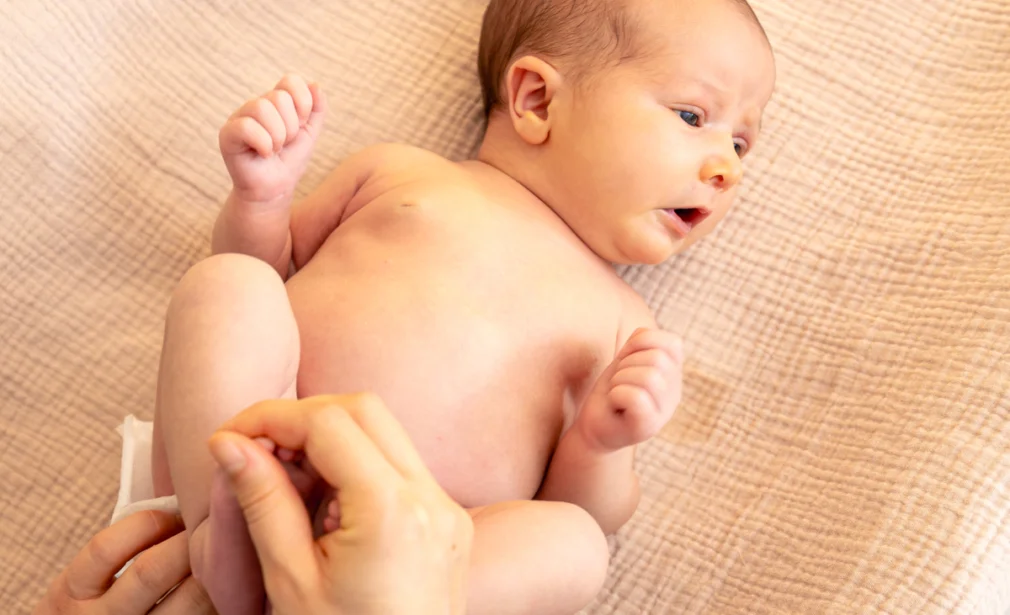
- For septic hip: child lies with the hip flexed, abducted, and externally rotated (the position of maximum joint space/comfort)
- Unwell, irritable child — especially infants who may only show reduced feeding and irritability
- Raised inflammatory markers — ESR, CRP, and white cell count elevated
🩺
What tests are required?
- Blood tests: FBC (raised WBC), CRP (elevated), ESR, blood cultures (before antibiotics if possible)
- Kocher criteria for septic hip: fever, non-weight bearing, ESR >40, WBC >12,000 — 3 or more criteria make septic arthritis very likely
- X-ray of the affected joint — may show joint space widening or soft tissue swelling; bony changes are a late sign
- Ultrasound — extremely useful to demonstrate a joint effusion (fluid collection). Can guide diagnostic aspiration
- Joint aspiration (definitive test): Pus aspirated from the joint confirms the diagnosis. Fluid sent for Gram stain, culture, cell count, glucose, and protein
- MRI — when diagnosis is uncertain or adjacent osteomyelitis is suspected
- Bone scan (technetium) — to identify multifocal involvement
💊
What are the treatment options?
- Emergency surgical drainage (arthrotomy or arthroscopy): The joint must be surgically opened, thoroughly washed out (joint irrigation), and all pus removed. This is an emergency procedure — every hour of delay risks further cartilage destruction
- Intravenous (IV) antibiotics: Broad-spectrum IV antibiotics started immediately after joint aspiration (or simultaneously with surgery if diagnosis is confirmed). Adjusted based on culture results. IV course typically 3–7 days followed by oral antibiotics for 3–6 weeks total
- Repeat washout: If clinical improvement is insufficient after 48–72 hours, repeat surgical washout may be required
- Joint splintage: The affected limb is rested in a comfortable position while active infection is present
- Physiotherapy: Commenced as soon as infection is controlled to restore joint range of motion and muscle strength
🌟
What is the expected outcome?
When diagnosed early and treated with urgent surgical drainage and appropriate antibiotics, most children make a complete recovery with full restoration of joint function. Delay in treatment is the most important predictor of poor outcome — every hour matters. In cases with late presentation, avascular necrosis of the femoral head (in hip septic arthritis), growth plate damage, and chronic osteomyelitis can occur. Long-term follow-up is essential to monitor joint development and growth.