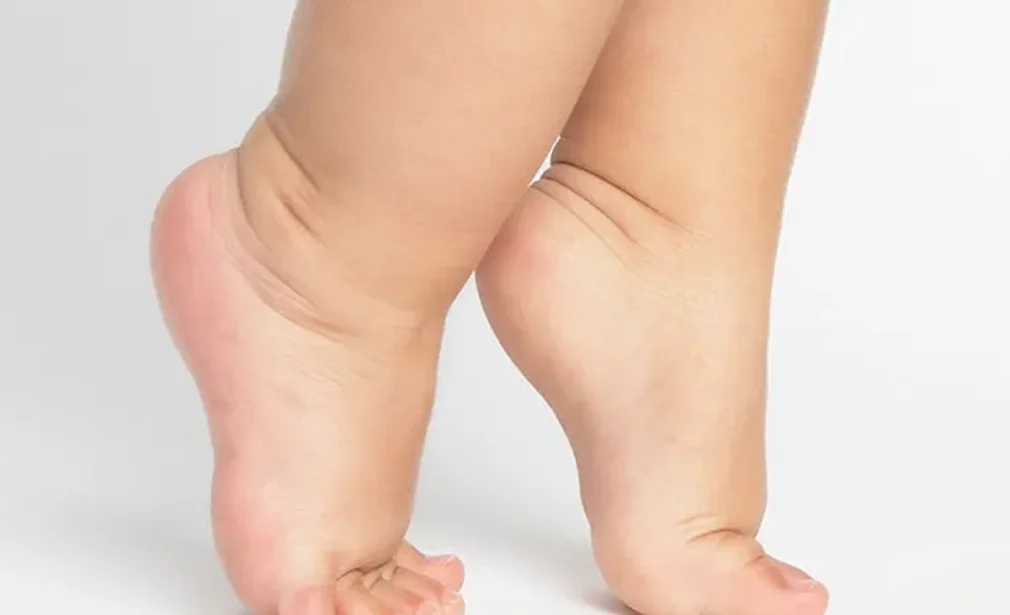
Toe walking is a gait pattern in which a child walks on the balls of their feet without the heel making contact with the ground. While it is common and often normal in children under 2 years of age who are just learning to walk, persistent toe walking beyond age 2–3 warrants evaluation.
It can be habitual (idiopathic) — a simple habit with no underlying cause — or it may be a sign of an underlying condition such as cerebral palsy, autism spectrum disorder, or tight Achilles tendons.
- Idiopathic (habitual) toe walking: The most common cause — no underlying abnormality. The child can walk flat-footed on request but prefers toe walking. Often familial
- Tight Achilles tendon / equinus contracture: The calf muscles and Achilles tendon are shortened, preventing the heel from touching the ground
- Cerebral palsy: Increased muscle tone (spasticity) in the calf causes toe walking — typically affects one or both legs depending on the type of CP
- Autism spectrum disorder: Sensory processing differences can lead to habitual toe walking
- Muscular dystrophy: Progressive muscle weakness can alter gait patterns including toe walking
- Spinal dysraphism: Tethered spinal cord or other spinal problems may present with toe walking
👶
How does the child present?
- Child consistently walks on toes or balls of feet, heels not touching the ground
- In idiopathic cases, the child can walk flat-footed when reminded or asked
- Tight calf muscles — reduced dorsiflexion range of motion (foot cannot bend upward beyond neutral)
- Calf muscle hypertrophy (enlargement) may be present
- Difficulty wearing flat shoes; prefers walking barefoot on toes
- In secondary causes: associated neurological findings such as spasticity, weakness, or developmental delays
🩺
What tests are required?
- Clinical gait analysis and neurological examination to identify any underlying cause
- Ankle dorsiflexion range of motion measurement with knee straight and bent
- Assessment of lower limb tone, power, reflexes, and sensation
- Developmental screening and autism evaluation where relevant
- MRI of the spine if neurological cause is suspected (tethered cord, spinal dysraphism)
- Nerve conduction studies and muscle biopsy if muscular dystrophy is suspected
💊
What are the treatment options?
- Observation: For children under 3 with flexible, idiopathic toe walking — watchful waiting is appropriate as many resolve spontaneously
- Physiotherapy and stretching: Calf stretching programme, gait retraining, and sensory-motor exercises form the first line of treatment
- Serial casting: Plaster casts applied to the foot in a progressively corrected position over 4–6 weeks to stretch the Achilles tendon and improve range of motion
- Ankle-foot orthosis (AFO): Custom splints worn during the day or at night to maintain the corrected position after casting
- Botulinum toxin (Botox) injection: For spastic toe walking (cerebral palsy) — Botox is injected into the calf muscles to reduce tone and improve walking pattern. Often combined with casting or physiotherapy
- Surgical Achilles tendon lengthening (TAL): Recommended when conservative treatment fails or when a fixed equinus contracture is present. The Achilles tendon is lengthened under anaesthesia, followed by casting and bracing
🌟
What is the expected outcome?
Most children with idiopathic toe walking respond well to conservative treatment — stretching, casting, and bracing. Surgical tendon lengthening is highly effective when required, achieving a plantigrade (heel-to-toe) gait in the majority of cases. In children with cerebral palsy, Botox combined with physiotherapy and orthoses significantly improves gait quality and function. Early treatment prevents fixed contracture formation and long-term gait problems.