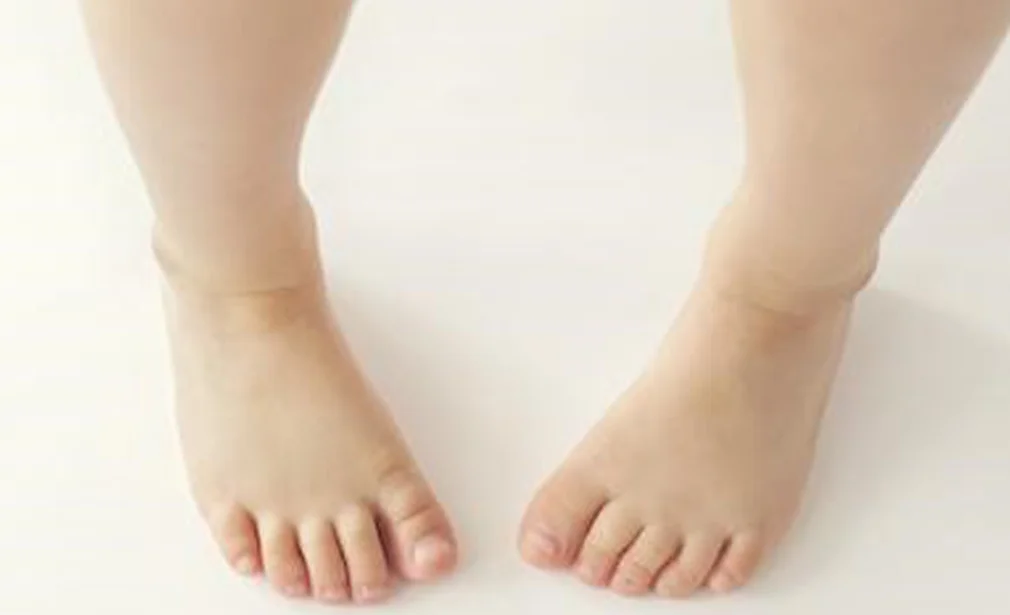
Intoeing is a condition where a child's feet point inward while walking or running — sometimes called being "pigeon-toed." It is one of the most common reasons parents bring their children to a pediatric orthopedic clinic.
Intoeing is painless in the vast majority of cases and does not cause long-term disability. It can originate at three levels: the foot itself, the shin bone (tibia), or the thigh bone (femur). Identifying the level helps determine management.
There are three primary anatomical causes of intoeing, each associated with a specific age group:
- Metatarsus adductus (0–1 year): The front part of the foot curves inward — often from positioning in the womb. Usually resolves spontaneously or with gentle stretching
- Internal tibial torsion (1–3 years): The shin bone is twisted inward — the most common cause in toddlers. Associated with W-sitting habit. Typically corrects by age 4–5
- Femoral anteversion (3–8 years): The thigh bone is rotated forward causing the entire leg to turn inward. Most prominent at age 5–6. Common in girls. Usually resolves by adolescence
👶
How does the child present?
- Feet visibly pointing inward during walking, running, or standing
- Child may trip or stumble more frequently than peers
- Preference for W-sitting (sitting with knees bent forward, feet splayed outward behind)
- Condition is typically painless — pain suggests a different underlying cause
- Parents may notice the child runs with a "windmill" or "egg-beater" pattern of the legs
- The child may appear clumsy, though sports participation is rarely affected
🩺
What tests are required?
- Detailed clinical examination to identify the level of intoeing (foot, tibia, or femur)
- Foot progression angle measured during walking — the angle the foot makes relative to the direction of travel
- Hip rotation assessment — measuring internal and external rotation range of motion
- Thigh-foot angle measured with child prone — assesses tibial torsion
- X-rays or advanced imaging rarely required unless an underlying structural problem is suspected
💊
What are the treatment options?
- Observation and reassurance: The mainstay for most children — the vast majority of intoeing resolves spontaneously as the child grows
- Activity modification: Discouraging W-sitting and encouraging cross-legged or tailor sitting to reduce tibial torsion
- Stretching exercises: For metatarsus adductus in infants — gentle foot stretches performed by parents during nappy changes
- Serial casting: For persistent or rigid metatarsus adductus that does not respond to stretching — short-leg casts applied every 1–2 weeks
- Derotation osteotomy: Surgery is considered only when intoeing persists beyond age 9–10 with significant functional impairment. The bone is cut, rotated to the correct alignment, and fixed with a plate. Results are excellent
🌟
What is the expected outcome?
The vast majority of children with intoeing — whether from metatarsus adductus, tibial torsion, or femoral anteversion — improve naturally without any treatment. Spontaneous correction usually occurs well before school age. Braces, special shoes, and exercises have not been shown to accelerate natural correction. Surgery is rarely needed but produces reliable results when it is indicated. Most children with intoeing lead completely normal, active lives.