
Developmental Dysplasia of the Hip (DDH) is a condition where an infant's hip joint does not form properly. The ball at the top of the thigh bone (femoral head) fits loosely into the hip socket (acetabulum), ranging from mild hip instability to complete dislocation. Early detection is key to non-surgical success.
Why Early Screening is Critical
When DDH is caught during the first 6 months of life, the hip socket is still soft cartilage and can be guided into normal development with a non-invasive chest-and-leg brace called a Pavlik Harness. If missed until after the child begins walking, surgical reconstruction is often required.
Signs Parents Should Watch For
- Uneven Thigh Skin Folds: Asymmetrical skin creases on the inner thighs or buttocks.
- Limited Hip Flexibility: One leg does not spread outward as far as the other during diaper changes.
- Different Leg Lengths: One leg appears slightly shorter when the baby lies on their back with knees bent (Galeazzi sign).
- Limping or Waddling Gait: In older toddlers who have already started walking.
Diagnosis & Non-Surgical Treatment
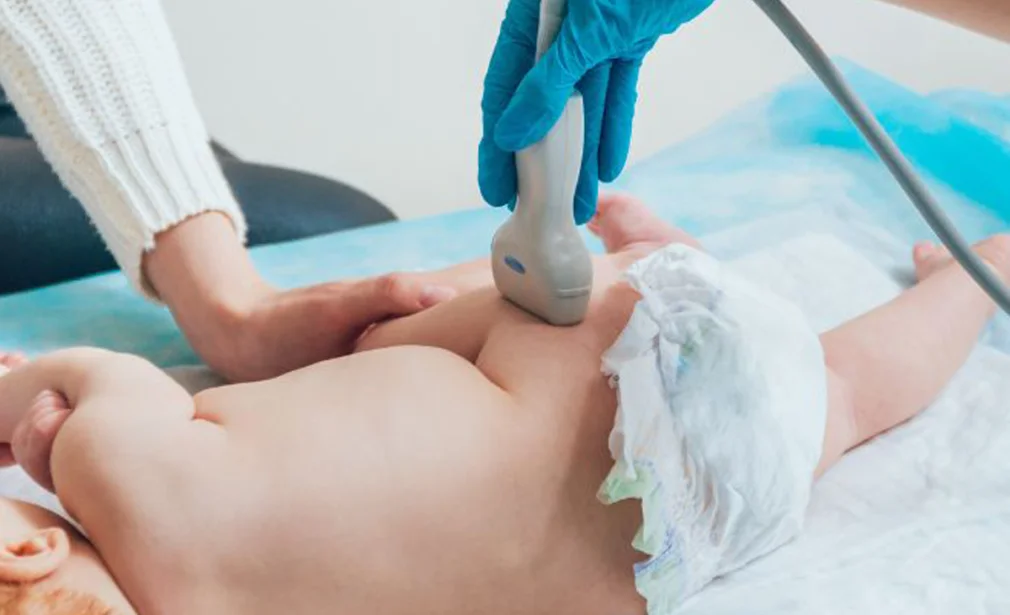
Pediatric orthopedic surgeons use gentle physical maneuvers (Ortolani and Barlow tests) and ultrasound imaging (Graf technique) to diagnose DDH accurately in young infants.
For babies under 6 months, a Pavlik Harness is worn continuously for 6 to 12 weeks. It positions the hips in a safe flexed position, encouraging the socket to deepen naturally around the femoral head.